Granite and engineered quartz often lead the countertop conversation, but they are not the only materials worth exploring. Soapstone, travertine and quartzite offer distinctly different looks and living experiences.
Choosing among these natural stone countertops means looking beyond color. Will scratches bother you? How often do you cook? Are you comfortable with a surface that changes over time?
For homeowners planning a kitchen or bathroom update in Fairhope, understanding those differences can help narrow the search.
Soapstone: A Soft Finish That Develops Character
Soapstone typically features gray tones, sometimes with green undertones or contrasting veins. Its smooth, matte appearance can provide a striking contrast to light cabinetry or complement natural wood finishes.
One practical advantage is its nonporous nature. Soapstone generally does not require sealing, and oiling is an optional way to deepen its color rather than a necessary protective treatment.
The tradeoff is softness. Soapstone scratches more easily than harder countertop stones and develops a worn appearance with use. Some homeowners appreciate that evolving character. Others prefer a surface that stays more uniform.
Consider soapstone if: You like a darker countertop and are comfortable with visible signs of everyday life.
Travertine: Warmth With More Care Required
Travertine brings cream, beige and warm earth tones into a room. Its natural movement and small cavities give it a different appearance from the crystalline patterns of granite.
However, travertine deserves careful consideration as a countertop. It is porous and sensitive to acids. Lemon juice, vinegar and other acidic substances can etch the surface, leaving dull marks. Sealing can improve stain resistance, but it does not prevent acid etching.
For that reason, travertine may be better suited to a carefully maintained vanity or decorative surface than a heavily used food preparation area. Bathroom products can also affect the finish, so placement matters there too.
Ask about filled versus unfilled material, the proposed finish and the care requirements before choosing it.
Consider travertine if: Warm tones are a priority and you accept the maintenance involved.
Quartzite: Natural Movement and a Harder Surface
Quartzite is a natural stone, while engineered quartz combines mineral particles with binders. Despite their similar names, they are different countertop materials.
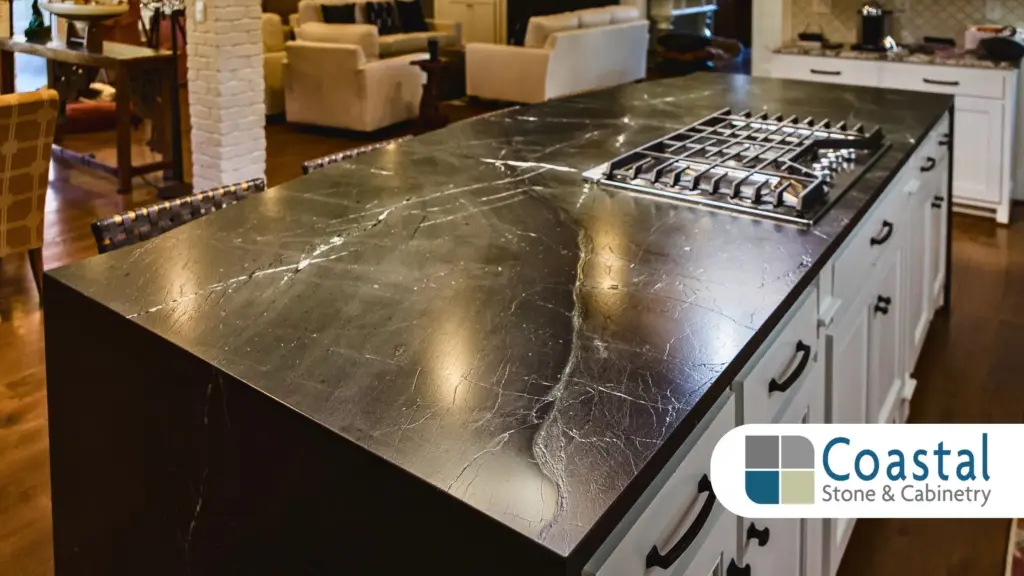
The countertop pictured in this article features Black Diamond Quartzite, one example of the distinctive appearance natural quartzite can bring to a space.
Some quartzite slabs feature light backgrounds and flowing veins that appeal to homeowners considering marble. True quartzite is hard and resists common kitchen acids, making it worth discussing for an active kitchen.
Sealing requirements vary with the stone’s porosity. Ask for guidance specific to the slab rather than assuming every quartzite needs the same maintenance schedule.
Accurate identification also matters. Stones sold under similar trade names can behave differently, so confirm the material and its expected performance with your fabricator.
Consider quartzite if: You want natural veining and a hard surface while accepting slab-specific care requirements.
Choose the Stone Around Your Routine
Before committing, compare the actual material with your cabinet finish and backsplash. Review edge options, maintenance expectations and the installed price—not just the slab price.
Bring these questions to your appointment:
- How will this surface respond to spills and daily use?
- Does it require sealing or another treatment?
- How will the pattern look around seams and sink openings?
- Is the material suitable for the room where I want to use it?
Browse Coastal Stone & Cabinetry’s completed design projects for ideas about coordinating finishes.
Discuss Your Countertop Project in Fairhope
Coastal Stone & Cabinetry brings design assistance, material selection, fabrication and installation together for homeowners updating their spaces.
Request a showroom appointment and countertop quote to discuss your project, ask about current material availability and compare options with the team.
Frequently Asked Questions
Does soapstone need to be sealed?
Soapstone generally does not require sealing because it is nonporous. Mineral oil or an appropriate wax may be used to enhance its appearance, but these treatments are optional.
Is travertine a good choice for kitchen countertops?
It can be used, but its porosity and sensitivity to acids make it a demanding choice for busy kitchens. Discuss your cooking habits and maintenance expectations before selecting it.
Are quartz and quartzite the same material?
No. Quartzite is quarried natural stone. Engineered quartz is manufactured using mineral particles and binders. Their care requirements and performance differ.
Does sealing prevent travertine from etching?
No. Sealing helps limit absorption and staining. Etching is a chemical reaction that changes the stone’s surface and may require professional refinishing.
Which of these stones scratches most easily?
Soapstone is softer and scratches more readily than true quartzite. Use cutting boards and follow the care guidance provided for your specific countertop.
Can I see these materials at Coastal Stone & Cabinetry?
Contact the showroom to ask about current samples, slabs and sourcing options. Availability can change, so confirm the materials you want to compare before visiting.