
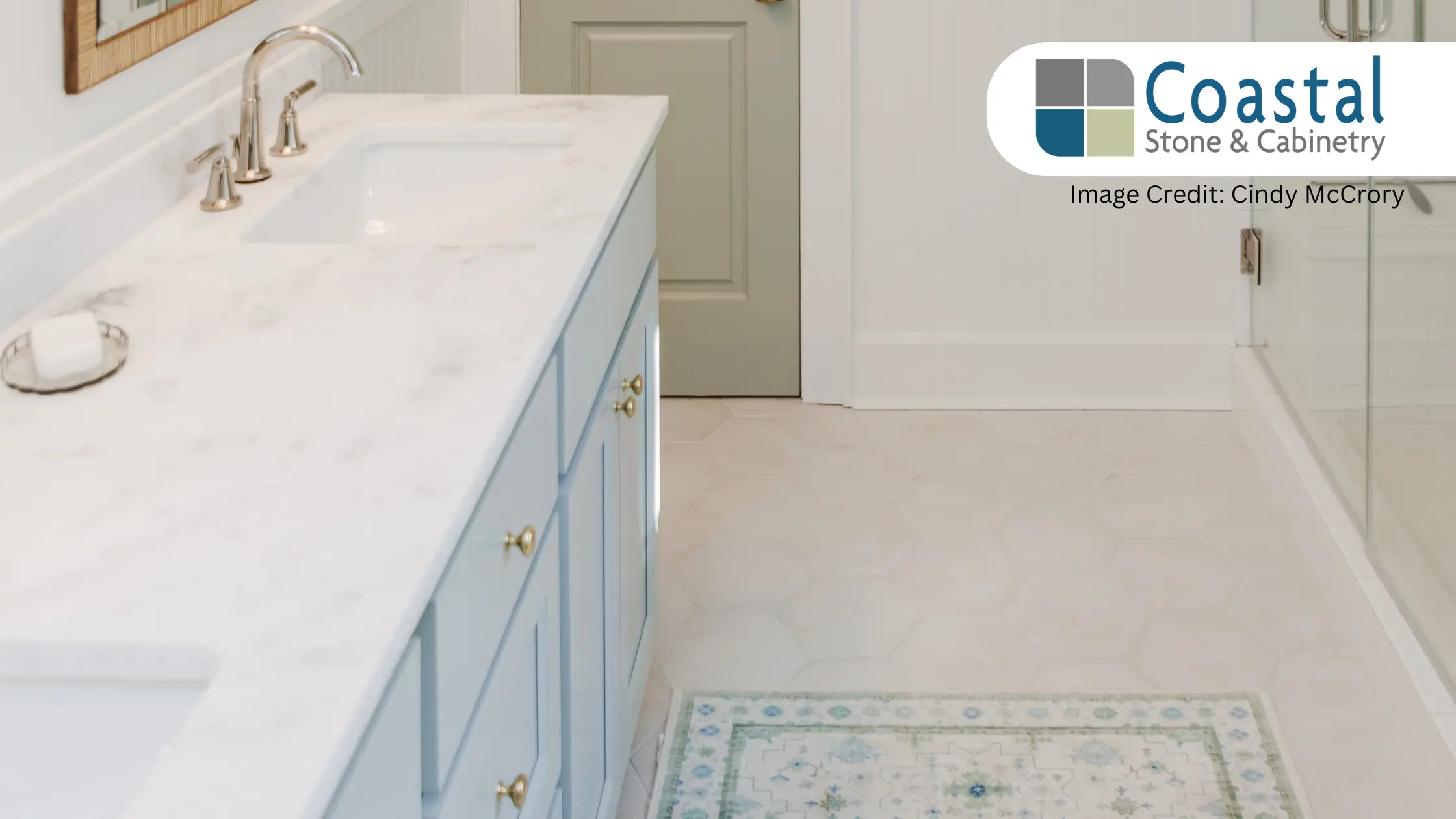
Transforming Compact Bathrooms with Premium Vanity Tops and Custom Layouts

A small bathroom does not have to feel small. The distinction between a bathroom that feels cramped and one that feels intentional, refined and genuinely luxurious often has very little to do with square footage and almost everything to do with the quality of the materials and the thoughtfulness of the layout. In Baldwin County homes where bathroom footprints are frequently modest, particularly in older construction and secondary bathrooms throughout the home, a well-designed vanity top and a layout that maximizes every inch of available space can transform a utilitarian room into something that genuinely elevates the daily experience of the people using it.

The vanity is the anchor of any bathroom, and the countertop surface is the most visible and most used element. Getting that choice right, in both material and configuration, is the single most impactful decision in a compact bathroom renovation.

Why Premium Materials Matter More in a Small Space

There is a counterintuitive truth about small bathrooms that experienced designers consistently observe: premium materials make a more dramatic impact in a compact space than they do in a large one. In a spacious master bathroom with generous square footage, a beautiful stone vanity top is one element among many competing for attention. In a compact bathroom where the vanity is the dominant feature of the space, a stunning marble or granite countertop with a well-chosen edge profile and a beautifully integrated sink becomes the entire design statement.

This means the investment calculus for a small bathroom renovation is different than it might appear at first glance. Upgrading the vanity top to a premium stone surface in a compact bathroom produces a more visible, more dramatic return on that investment than the same upgrade would in a larger space where the impact is diluted across more square footage. The bathroom becomes the kind of space that surprises guests with its quality and sophistication, and that effect is achieved not through size but through material selection.

Choosing the Right Stone for a Bathroom Vanity Top

The bathroom environment is meaningfully different from the kitchen when it comes to what stone needs to handle. The primary concerns in a bathroom vanity top are moisture resistance, ease of cleaning and visual elegance rather than the heat resistance and heavy cutting-board impact that kitchen countertops face. This opens up material options that would be higher-maintenance choices in a kitchen but perform beautifully in a bathroom setting.

Marble: The Bathroom Standard for Good Reason

Marble remains the most coveted material for bathroom vanity tops, and the reasoning is straightforward. The veining, the depth of color and the way marble interacts with light, especially in a bathroom where natural light or well-designed artificial light is part of the design intent, creates an atmosphere that no other material fully replicates. A marble vanity top in a compact bathroom elevates the entire room in a way that feels disproportionate to the size of the investment.

The maintenance considerations with marble are real but manageable in a bathroom context. Marble is susceptible to etching from acidic substances and staining from certain personal care products if left on the surface for extended periods. In a bathroom where the surface is not exposed to the cutting and cooking activity of a kitchen, these vulnerabilities are easier to manage through careful use and periodic sealing. The payoff in visual quality is significant enough that marble remains the first recommendation for bathroom vanity tops for homeowners who are willing to give the surface reasonable care.

Coastal Stone & Cabinetry’s bathroom countertop selection in marble includes a range of options from classic white Carrara to more dramatic options with bold veining that can serve as a focal point in a compact bathroom where the vanity is the primary design element.

Quartz: Premium Performance with Lower Maintenance

For homeowners who want the elevated look of a premium stone bathroom vanity without the maintenance commitment that marble requires, quartz offers a compelling alternative. Today’s engineered quartz products replicate the visual quality of natural marble convincingly enough that many homeowners and guests cannot distinguish the two at a glance, while the non-porous surface of quartz eliminates the vulnerability to staining and etching that natural stone carries.

In a bathroom shared by multiple family members or in a secondary bathroom that sees high traffic and heavy daily use, the lower-maintenance profile of quartz is a practical advantage that matters. The surface requires no sealing, resists staining from personal care products and cleans easily with standard household cleaners.

The current generation of quartz products available through Coastal Stone & Cabinetry includes options that convincingly replicate the dramatic veining and warm tones that are trending strongly in 2026 bathroom design, giving homeowners access to a premium aesthetic without the upkeep premium that natural stone demands.

Granite: Durable Elegance for the Bathroom

Granite is not typically the first material that comes to mind for a bathroom vanity top, but it deserves consideration for homeowners who want a natural stone surface with outstanding durability and a wide range of color and pattern options. Granite’s hardness and density make it highly resistant to chipping and scratching, and its natural variation means every installation is unique in a way that adds genuine character to a compact bathroom.

The warmer-toned granites that are trending in 2026, including stones with gold, amber and caramel movement, pair beautifully with the wood cabinet finishes and nature-inspired hardware that are popular in current bathroom design. For a compact bathroom where the vanity is the design anchor, a warm-toned granite with interesting movement can give the space a richness and character that feels unexpected and genuinely special.

Custom Layouts That Make Small Bathrooms Work Harder

Beyond the countertop material, the configuration of the vanity and the layout of the bathroom are where a compact bathroom renovation earns its impact. A thoughtfully designed custom layout can make a small bathroom feel significantly more spacious, more functional and more elegant than the original configuration suggested.

Floating Vanities Create Visual Space

One of the most effective design moves in a compact bathroom is replacing a floor-mounted vanity with a floating or wall-mounted cabinet. Lifting the vanity off the floor exposes the floor surface beneath, which visually extends the floor plane and makes the room feel larger. It also creates functional cleaning benefits and, in some cases, allows for a slightly deeper countertop that would not fit as a floor cabinet without dominating the room.

A premium stone vanity top paired with a floating cabinet creates a combination that reads as intentional and high-end regardless of the bathroom’s square footage, and Coastal Stone & Cabinetry’s bathroom cabinets selection includes options suited to wall-mounted configurations that complement their stone vanity top offerings.

Integrated and Undermount Sinks Maximize Counter Space

In a compact bathroom, every inch of counter surface matters, and the sink configuration plays a significant role in how much usable countertop space remains once the sink is installed. Undermount sinks, which attach to the underside of the countertop and leave the full surface area of the stone visible, maximize the functional counter space and create a cleaner, more seamless visual line than a drop-in sink that interrupts the countertop surface with a visible rim.

For very compact vanities where counter space is extremely limited, a single undermount sink positioned toward one end of the countertop rather than centered can leave a more useful stretch of counter on one side for daily use items. In larger compact bathrooms where a double vanity makes sense, two undermount sinks with a shared stone countertop creates a cohesive, high-end look that also addresses the practical demands of shared bathroom use.

Backsplash Above the Vanity

The wall above the vanity countertop and below the mirror is often treated as a neutral afterthought in bathroom design, but it represents an opportunity to extend the material quality of the countertop into the vertical plane in a way that makes the whole vanity wall feel more finished and intentional.

A stone or tile backsplash carried from the countertop surface to the underside of the mirror creates a continuous material presence that gives the vanity wall a polished, custom appearance. In a compact bathroom where the vanity wall is the dominant visual element, this relatively modest addition has a significant impact on the finished quality of the space.

Stone Tile Showers Complete the Premium Compact Bathroom

In a compact bathroom, the shower is the other major visual surface, and its relationship to the vanity countertop in terms of material palette and design direction significantly affects how the room reads as a whole. A premium stone vanity top paired with a stone tile shower creates a cohesive material story throughout the bathroom that elevates the entire space rather than leaving the shower feeling disconnected from the vanity investment.

Large-format tile in the shower reduces the number of grout lines visible, which makes the shower feel larger and cleaner. Carrying the same stone or complementary tile from the shower floor up the walls creates the kind of spa-like continuity that compact bathrooms benefit from most because it removes the visual fragmentation that multiple competing materials create in a small space.

Working With Coastal Stone & Cabinetry on Your Compact Bathroom

The transformation potential of a compact bathroom is often underestimated until the right materials and the right layout come together in a renovation that makes the room feel genuinely different from what it was before. Premium vanity tops, custom cabinet configurations, thoughtfully specified sinks and a cohesive tile story throughout the bathroom are the elements that produce that result, and they are most effective when they are designed together rather than selected independently.

Coastal Stone & Cabinetry’s showroom at 16020 S Greeno Road in Fairhope gives Baldwin County homeowners the opportunity to see full stone slabs, tile options and cabinet configurations together in a single visit, which is the most effective way to make material decisions that work as a cohesive design rather than as isolated choices. Our design associates can help you envision how a compact bathroom renovation comes together and what combination of materials and layout choices will produce the result you are looking for.

Serving homeowners throughout Baldwin County including Daphne, Spanish Fort, Gulf Shores, Foley, Orange Beach and Point Clear, Coastal Stone & Cabinetry brings local expertise and a full range of premium stone and tile options to bathroom renovation projects of every size.

Ready to transform your compact bathroom? Contact Coastal Stone & Cabinetry at 251-929-3475 to schedule a showroom appointment and start the conversation about what your bathroom renovation can become.


Frequently Asked Questions

Is marble a practical choice for a compact bathroom vanity top?
Yes, particularly in a bathroom where the surface is not exposed to the heavy cooking activity and cutting that a kitchen countertop faces. Marble’s primary vulnerabilities, etching from acidic substances and staining from certain products left on the surface, are more manageable in a bathroom context where careful use and periodic sealing keep the stone performing well. The visual payoff of marble in a compact bathroom is significant, since the veining and light interaction of natural marble creates an atmosphere that elevates the entire room. For homeowners who prefer a lower-maintenance option with a similar look, engineered quartz that replicates marble is a strong alternative.

What size vanity top works best in a compact bathroom?
The right vanity top size depends on the specific dimensions of the bathroom, the placement of fixtures and the layout of the room. In very compact bathrooms, a narrower depth vanity top, sometimes as shallow as 18 to 20 inches, combined with a floating cabinet can free up floor space and make the room feel more open without sacrificing counter functionality. An undermount sink positioned toward one end rather than centered can also maximize the usable counter space on the remaining surface. The Coastal Stone & Cabinetry team can help you evaluate the specific dimensions of your bathroom and determine the vanity configuration that makes the most of the available space.

How does a floating vanity make a small bathroom feel larger?
A wall-mounted or floating vanity lifts the cabinet off the floor, exposing the floor surface beneath and visually extending the floor plane of the room. This creates the perception of more open space even when the actual square footage has not changed. The visual continuity of the floor running beneath the vanity removes the visual barrier that a floor-mounted cabinet creates and makes the room feel less divided. Paired with a premium stone vanity top and clean, simple cabinetry, a floating vanity is one of the most effective design moves available for making a compact bathroom feel intentional and spacious.

Should the shower tile and vanity countertop match in a compact bathroom?
They do not need to match exactly, but they should be designed to complement each other as part of a cohesive material palette. In a compact bathroom where both surfaces are visible simultaneously, using materials that are clearly from the same design direction, whether that means similar tones, similar stone character or complementary textures, creates a more unified and spacious-feeling space than materials that feel disconnected from each other. Coastal Stone & Cabinetry can help you select vanity and shower materials that work together as a cohesive design during a showroom visit where both options can be evaluated side by side.

Does Coastal Stone & Cabinetry handle both the vanity top and the shower tile for a compact bathroom renovation?
Yes. Coastal Stone & Cabinetry provides stone and tile solutions for the full scope of a bathroom renovation including vanity countertops, shower tile and backsplash above the vanity. Working with a single supplier for these complementary surfaces ensures the material selections are coordinated from the beginning rather than having to reconcile choices made independently through different vendors. Contact the team at 251-929-3475 to schedule a showroom appointment and discuss your compact bathroom project in full.
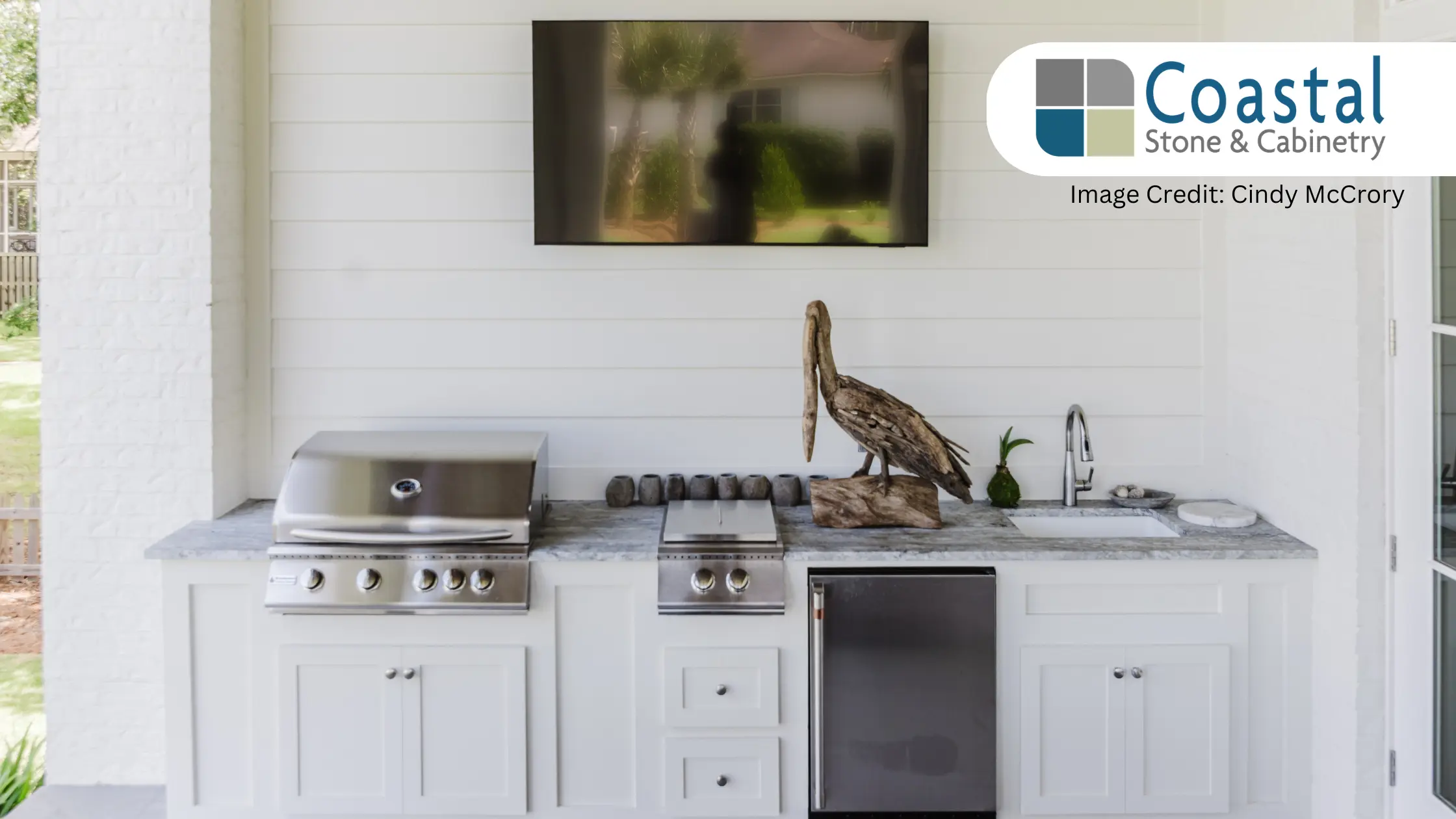
Designing Weatherproof Luxury: A Guide to Local Outdoor Kitchen Countertops

Outdoor kitchens have become one of the most sought-after home improvements along the Gulf Coast, and for good reason. Baldwin County’s climate offers enough warm months to make an outdoor kitchen a genuinely functional extension of the home rather than a seasonal novelty. But designing an outdoor kitchen that holds up to the specific conditions of the Gulf Coast, the salt air, the UV intensity, the heat and the tropical weather that rolls through seasonally, requires a different set of material decisions than an interior kitchen renovation.

The countertop is the most visible and most used surface in any kitchen, and in an outdoor environment it faces conditions that would compromise inferior materials within a season or two. Choosing the right countertop material for an outdoor kitchen in Baldwin County is a decision that shapes both how the space looks and how long it performs at the level you invested in.

This guide walks through the best outdoor countertop options for Gulf Coast conditions, what to look for when evaluating materials and how to design an outdoor kitchen that delivers both luxury and longevity in equal measure.

Why Outdoor Kitchen Countertops Require Different Thinking

An interior kitchen countertop lives in a controlled environment. Temperature is regulated, humidity is managed and the surface is shielded from direct sun, rain and wind. An outdoor kitchen countertop faces all of these elements simultaneously and must handle them consistently over years of daily exposure without cracking, fading, staining or deteriorating in ways that compromise the appearance or function of the space.

The Gulf Coast adds specific challenges beyond what most outdoor kitchen guides written for other climates account for. Salt air accelerates corrosion and surface degradation on certain materials that would perform perfectly well in an inland environment. UV intensity at these latitudes is high enough to fade and bleach surfaces that were not designed for sustained sun exposure. Humidity fluctuations between summer and the cooler months create expansion and contraction stress on materials that are sensitive to temperature changes.

Choosing a material that was engineered to handle these conditions rather than one that simply looks good indoors is the starting point for a successful outdoor kitchen design in Baldwin County.

Granite: The Gold Standard for Outdoor Kitchens

Granite has been the countertop of choice for outdoor kitchens for generations, and in 2026 it remains one of the strongest material options available for Gulf Coast outdoor applications. The reasons are straightforward. Granite is a natural stone that forms under extreme heat and pressure, which gives it inherent resistance to the temperature extremes that outdoor surfaces experience. It does not warp, crack or delaminate under heat exposure the way engineered materials can. It handles the direct sun of a Gulf Coast summer without fading or surface degradation, and its natural density makes it highly resistant to the kinds of impacts and abrasion that outdoor cooking environments produce.

For homeowners cooking outdoors over open flame grills, smokers or pizza ovens, granite’s heat resistance is a practical advantage that lighter-duty materials cannot match. A hot pan placed directly on granite will not cause the surface damage that the same action would create on laminate, certain tile grouts or resin-based materials.

The maintenance consideration with granite outdoors is sealing. Outdoor granite requires more frequent sealing than interior granite because UV exposure and weather cycling accelerate the rate at which the sealer breaks down. A properly sealed outdoor granite countertop repels moisture, resists staining from food, grease and the elements and maintains its appearance through the Gulf Coast’s wet season without issue. An unsealed or improperly maintained outdoor granite surface will absorb moisture and staining more readily, which is why working with a supplier who understands outdoor stone applications and provides proper guidance on maintenance is important.

Coastal Stone & Cabinetry’s outdoor kitchen countertops selection includes granite options suited specifically to outdoor applications across Baldwin County, from Fairhope and Point Clear to Gulf Shores and Orange Beach.

Porcelain Tile: The Low-Maintenance Outdoor Performer

Porcelain tile has emerged as one of the most compelling outdoor kitchen countertop options available and deserves serious consideration for Baldwin County homeowners who want a low-maintenance surface that holds up to the coastal environment without compromise.

The characteristics that make porcelain an outstanding outdoor material are rooted in how it is manufactured. Fired at extremely high temperatures, porcelain achieves a density and hardness that makes it essentially impervious to moisture absorption, frost, UV exposure and the salt air that degrades other surfaces over time. It does not require sealing the way natural stone does, it will not crack from temperature cycling in the range that Gulf Coast climates produce and it resists staining from food, grease and weather with minimal cleaning effort.

Large-format porcelain slabs in natural stone looks, including realistic granite, marble and quartzite replication, have become increasingly popular for outdoor kitchens because they deliver the aesthetic of high-end natural stone with performance characteristics that natural stone requires maintenance to sustain. For homeowners who want the look of a premium outdoor kitchen without the commitment to periodic sealing and detailed stone maintenance, porcelain tile is one of the most intelligent choices available.

The design flexibility of porcelain is also worth noting. The range of colors, textures and format sizes available in porcelain tile gives outdoor kitchen designers significant creative latitude in how the countertop relates to the surrounding outdoor living space, the hardscape and the architecture of the home. Coastal Stone & Cabinetry’s backsplash selection includes tile options that can be specified for outdoor kitchen vertical surfaces and backsplash areas to complement the countertop and create a cohesive outdoor kitchen design.

Quartzite: Natural Stone Toughness for Outdoor Applications

For homeowners who are committed to a natural stone countertop in their outdoor kitchen and want the most durable option available, quartzite deserves serious consideration. As discussed in our 2026 countertop trends guide, quartzite is a natural stone formed under extreme heat and pressure from sandstone, making it one of the hardest and most dense natural stone surfaces on the market.

Quartzite’s hardness makes it more resistant to scratching, chipping and surface damage from outdoor use than softer natural stones, and its natural formation gives it better resistance to the thermal stress of outdoor environments than certain engineered products. The dramatic veining and natural variation of quartzite creates the kind of high-end visual impact that makes an outdoor kitchen feel like a genuine luxury extension of the home rather than a utilitarian grill station.

The maintenance commitment for outdoor quartzite is similar to granite, requiring periodic sealing to maintain the stone’s resistance to moisture and staining in an exposed outdoor environment. For the right homeowner who is committed to that maintenance and wants a natural stone surface with both outstanding visual character and genuine toughness, quartzite is one of the most rewarding outdoor kitchen countertop choices available.

What to Avoid in Gulf Coast Outdoor Kitchen Countertops

Understanding what does not work well in a Gulf Coast outdoor kitchen is as important as knowing what does. A few materials that perform well indoors are poor choices for outdoor applications in this specific environment.

Standard quartz engineered countertops, despite their outstanding performance in interior kitchens, are generally not recommended for outdoor applications in direct sunlight. The resin binders used in quartz manufacturing are susceptible to UV degradation over time, which can cause discoloration, surface changes and in some cases structural damage in outdoor applications where the surface receives sustained direct sun exposure. Most quartz manufacturers explicitly void their warranties for outdoor installations, which is important to know before specifying quartz for an outdoor kitchen.

Marble, while beautiful, is one of the more challenging natural stones for outdoor kitchen applications because its softer surface is more susceptible to etching from acidic foods and beverages, scratching and the cumulative effects of outdoor exposure. In a covered, shaded outdoor kitchen where UV exposure is limited and the homeowner is committed to careful maintenance, marble can work, but it is not the first recommendation for a Gulf Coast outdoor kitchen that will see genuine cooking use.

Laminate countertops have no place in a Gulf Coast outdoor kitchen. The delamination that occurs when laminate is exposed to moisture, heat and humidity cycling is inevitable and rapid, and the result is a surface that looks significantly worse than it did at installation within a short timeframe.

Design Considerations for the Full Outdoor Kitchen

Beyond the countertop material itself, a few design decisions shape how well the outdoor kitchen performs and how good it looks over time.

Edge profile selection matters more outdoors than it does in an interior kitchen. Complex, highly detailed edge profiles with tight inside corners can collect debris, water and mildew in an outdoor environment in ways that are difficult to clean. A cleaner, simpler edge profile, including a standard eased or slightly beveled edge, performs better outdoors from a practical maintenance standpoint while still looking polished and intentional.

Grout joint sizing and grout selection for tile outdoor countertops affect both performance and appearance. Larger grout joints are generally easier to keep clean in an outdoor environment than very narrow joints that trap debris, and epoxy grout, which is non-porous and highly stain resistant, is a better outdoor specification than standard cement-based grout.

The relationship between the countertop and the surrounding outdoor elements, including the cabinetry or masonry base, the backsplash, the flooring and the structural framing of the outdoor kitchen, should be considered as a system rather than as individual components. Coastal Stone & Cabinetry works with Baldwin County homeowners on the full scope of outdoor kitchen surface design, helping ensure that countertop selection, backsplash specification and overall material palette work together as a cohesive whole.

Bringing Your Outdoor Kitchen Vision to Life

The best outdoor kitchen countertop is the one that delivers the aesthetic you are after while genuinely holding up to the conditions it will face on the Gulf Coast. That combination of beauty and performance is achievable across several material options, and the right choice depends on how the space will be used, how much maintenance you are willing to commit to and what look you are trying to create in the outdoor living environment.

Coastal Stone & Cabinetry’s showroom at 16020 S Greeno Road in Fairhope is the right place to see full slab options in person, ask questions about outdoor performance and get honest guidance on what will work for your specific outdoor kitchen project. The design associates there understand the Gulf Coast’s specific demands and can help you make a decision that looks as good in five years as it does on installation day.

Serving homeowners throughout Baldwin County including Daphne, Spanish Fort, Gulf Shores, Foley, Orange Beach and Point Clear, Coastal Stone & Cabinetry brings local expertise and a full range of outdoor-appropriate stone and tile options to every project.

Ready to design your outdoor kitchen countertop? Contact Coastal Stone & Cabinetry at 251-929-3475 to schedule a showroom appointment.


Frequently Asked Questions

Can I use quartz countertops in my outdoor kitchen in Baldwin County?
Standard engineered quartz is generally not recommended for outdoor kitchen applications where the surface receives direct sunlight. The resin binders used in quartz manufacturing are susceptible to UV degradation, which can cause discoloration and surface changes over time in outdoor conditions. Most quartz manufacturers explicitly void their product warranties for outdoor installations. For outdoor kitchen countertops in Baldwin County, granite, porcelain tile and quartzite are stronger choices that are designed to handle sustained UV and weather exposure without the performance limitations that affect quartz outdoors.

How often does outdoor granite need to be sealed on the Gulf Coast?
Outdoor granite in a Gulf Coast environment typically requires more frequent sealing than interior granite because UV exposure and weather cycling break down the sealer more rapidly than controlled interior conditions do. A general guideline is to reseal outdoor granite at least once a year, though high-UV applications or heavily used cooking surfaces may benefit from more frequent attention. Coastal Stone & Cabinetry can provide specific sealing recommendations based on the granite selected and the conditions of the outdoor kitchen installation.

What is the most low-maintenance outdoor kitchen countertop option?
Porcelain tile is consistently one of the most low-maintenance outdoor countertop options available for Gulf Coast conditions. It does not require sealing, resists moisture absorption, handles UV exposure without fading or surface degradation and is easy to clean with routine maintenance. Large-format porcelain slabs in natural stone looks deliver the aesthetic of premium stone with significantly less ongoing maintenance commitment than natural stone requires, making them an excellent choice for homeowners who want a beautiful outdoor kitchen without intensive upkeep.

What edge profile works best for an outdoor kitchen countertop?
Simpler edge profiles generally perform better in outdoor kitchen applications than highly detailed or complex profiles. Standard eased, beveled or bullnose edges are easier to keep clean outdoors because they do not collect debris, water or mildew in the tight inside corners that more ornate profiles create. The edge profile should be specified with the outdoor environment in mind rather than simply replicating whatever was used in the interior kitchen, and the Coastal Stone & Cabinetry team can walk you through the options that make the most practical sense for your specific outdoor kitchen design.

Does Coastal Stone & Cabinetry handle outdoor kitchen countertop projects throughout Baldwin County?
Yes. Coastal Stone & Cabinetry serves homeowners across Baldwin County including Fairhope, Daphne, Spanish Fort, Gulf Shores, Foley, Orange Beach and Point Clear for both interior and outdoor kitchen countertop projects. The team brings experience with the specific material requirements of Gulf Coast outdoor applications and can help you select and specify a countertop that delivers both the aesthetic and the performance you are looking for. Contact the team at 251-929-3475 to schedule a showroom appointment and discuss your outdoor kitchen project.